We grow medicine for people
by first feeding the bees.
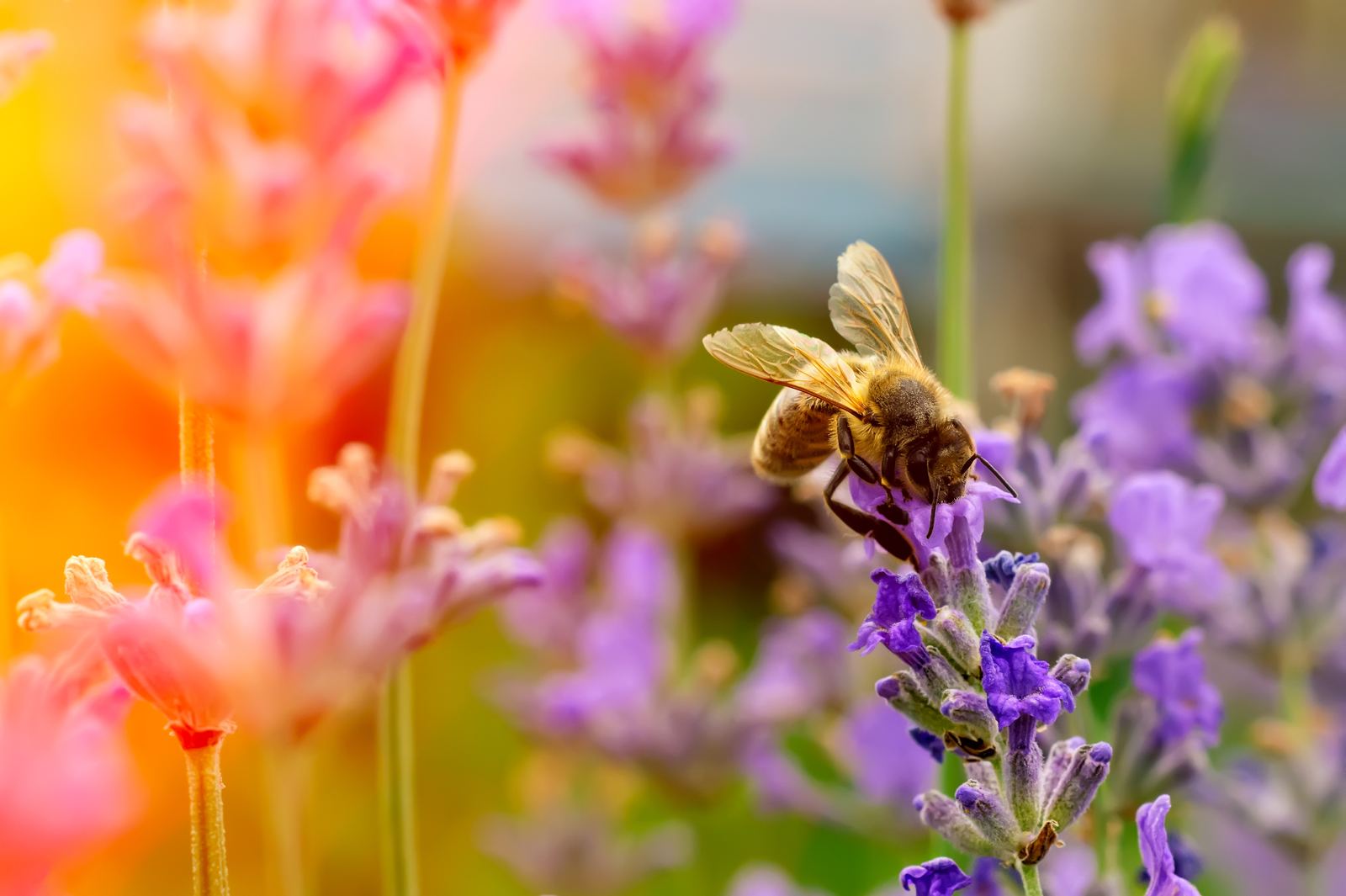
Kendra is a recognized Pollinator Steward Certified partner. Kendra has helped to create a sanctuary maintained for native bees, honeybees, hummingbirds, butterflies, and the beneficial insects that hold our valley together.
What stewardship looks like here
Pollinator stewardship isn't a slogan on a sign. It's a daily discipline that shapes every decision we make on the farm — what to plant, when to mow, what to leave standing, and what never to spray.
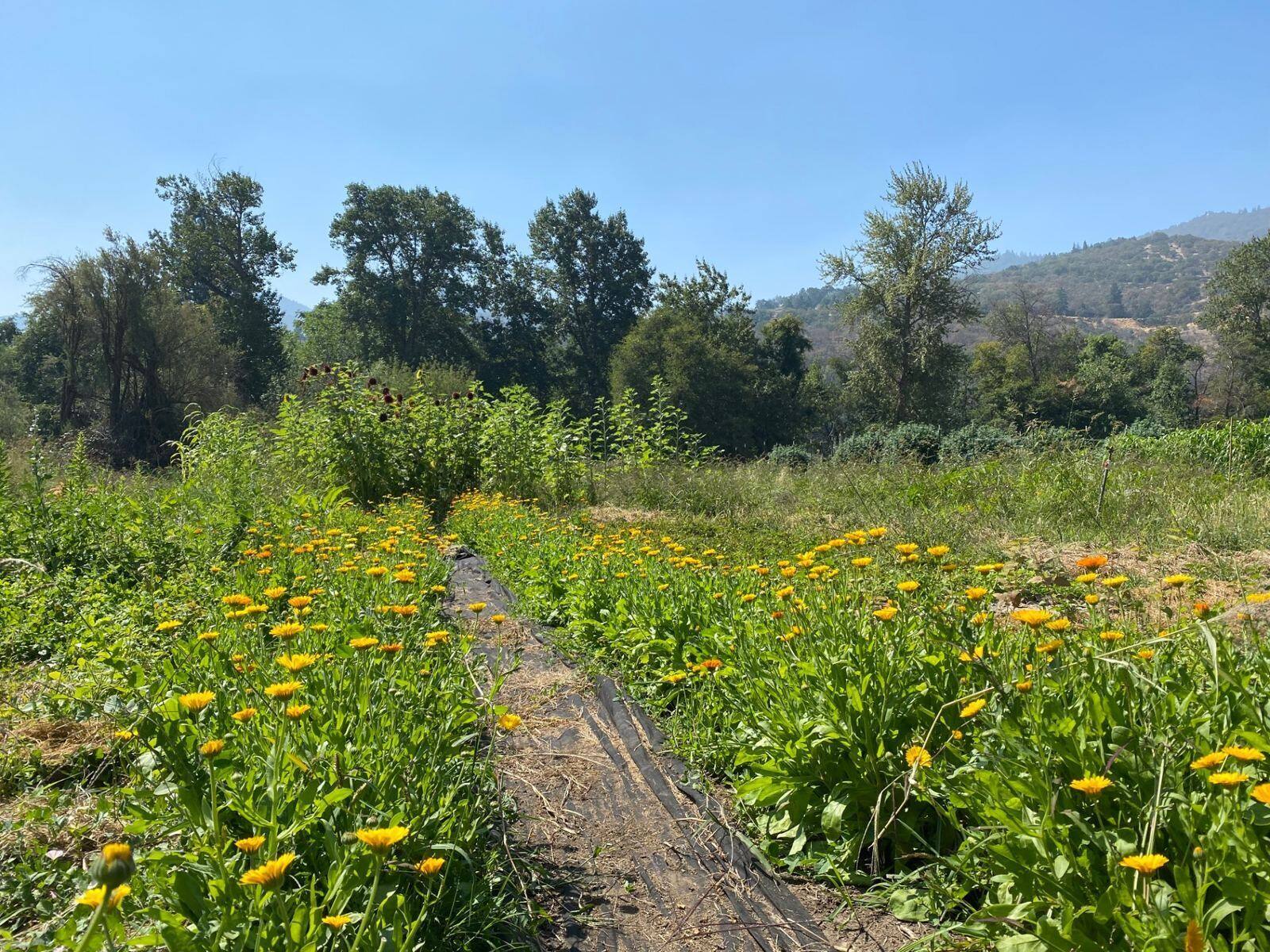
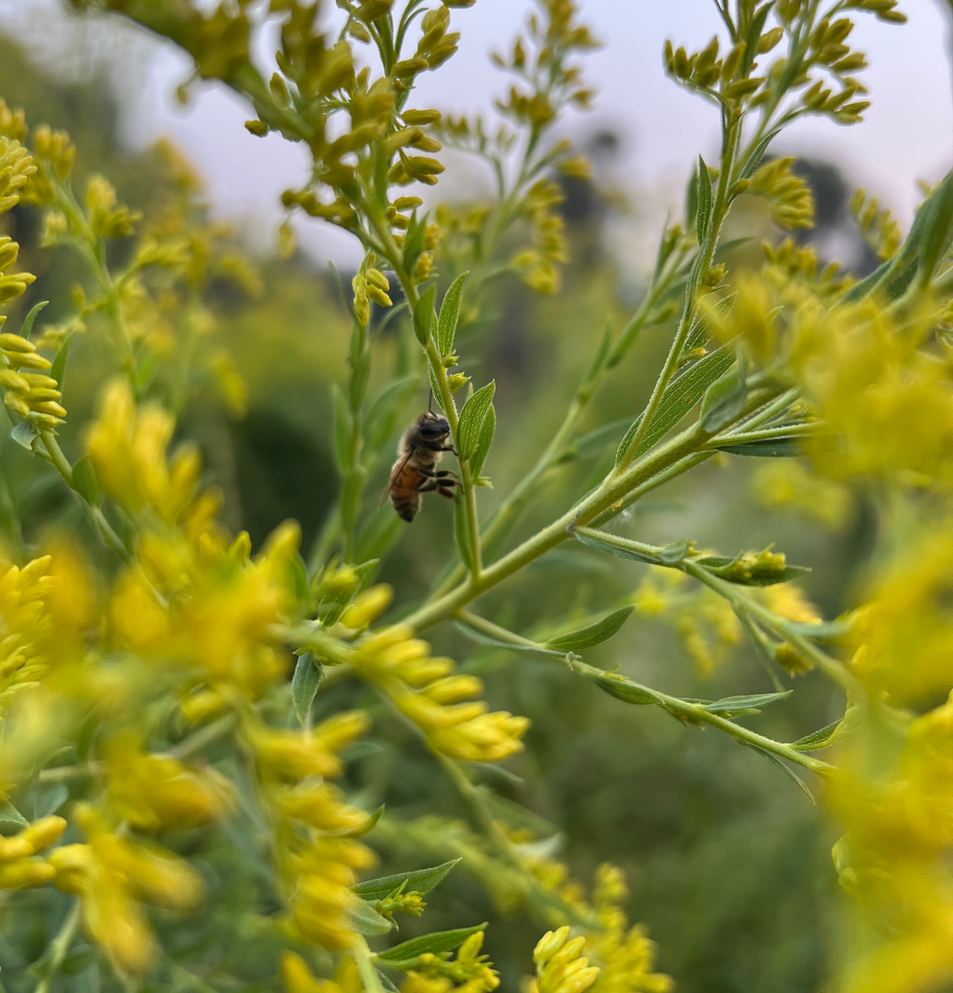
We keep something in bloom from the first plum blossom in early March all the way through the last asters and goldenrod in October. Hedgerows of ninebark, elderberry, and native willow give early forage; rows of borage, phacelia, calendula, and tulsi carry summer; sunflowers and buckwheat close the season.
Our practice
No synthetic pesticides or herbicides.
Ever. The whole farm — production beds, paths, hedgerows — is managed without them.
Honeybee keepers.
We steward a small number of honeybee hives on the land and in other places nearby — tending the colonies alongside the native pollinators they share forage with.
Continuous bloom, March through October.
We plant succession bloom across native perennials, herbs, and cover crops so something is always feeding pollinators.
Habitat left standing.
Bare ground for solitary bees, hollow stems through winter for overwintering cavity nesters, leaf litter under hedgerows.
Clean water.
Shallow water sources with landing stones, refreshed regularly.
Soil first.
Cover cropping, compost, and rotation rather than synthetic fertilizer — healthy soil grows healthier plants for pollinators and people.
Why it matters
Roughly one in three bites of food we eat depends on a pollinator. In southern Oregon, native bumble bees, mason bees, butterflies, hummingbirds, and other vital pollinating species are in measurable decline, largely due to habitat loss, chemical exposure, and fragmented ecosystems.
At wild garden medicinals, stewardship means actively creating refuge.
Alongside cultivating medicinal herbs, we also steward honeybee hives both on the land and in nearby spaces, tending them as part of a broader living ecosystem shared with native pollinators. Healthy pollinator populations support stronger plants, healthier soil, greater biodiversity, and more resilient local food and medicine systems.
A few thoughtfully cared-for acres can become meaningful sanctuary inside a working landscape.
When you support wild garden medicinals, by joining the CSA, coming to a workshop, or simply buying a jar of salve, you're helping keep one of those acres in flower.
40+
species in bloom across the season
0
synthetic pesticides used on the farm
8 mo.
of continuous pollinator forage